110,000 Square Meters + 100,000 Visitors! The 2025 Shanghai Maritime Exhibition Redefines Industry Heights with the World's Largest Scale
—— Enterprises from Over 40 Countries Gather at the Event, with Chinese Maritime Forces Leading the Global Transformation Wave
Currently, the global maritime industry is in a period of profound transformation. The International Maritime Organization (IMO)'s target of achieving net-zero greenhouse gas emissions in the shipping industry by 2050 is driving the entire industry to accelerate its transition towards green and intelligent development. Geopolitical fluctuations and the restructuring of global supply chains are prompting countries to reevaluate the safety of maritime transportation routes and the construction of port infrastructure. Meanwhile, breakthroughs in digital technologies such as artificial intelligence and the Internet of Things are bringing new possibilities to shipbuilding and shipping management. Against this backdrop, the 2025 China International Maritime Exhibition, which successfully concluded on December 5, 2025, is not only a stage for enterprises to showcase their achievements but also a vane for the industry's development.
This event, hailed as the "barometer" of the global maritime industry, has once again set a new record with its impressive figures: an exhibition area of 110,000 square meters, over 2,200 exhibitors, and more than 100,000 global visitors. It has secured its position as the world's largest maritime exhibition for three consecutive sessions, demonstrating China's pivotal role in the global maritime industry chain with its substantial scale and influence.

I. Scale Breaks Records Again: 110,000-square-meter Exhibition Area Outlines the Global Industry Map
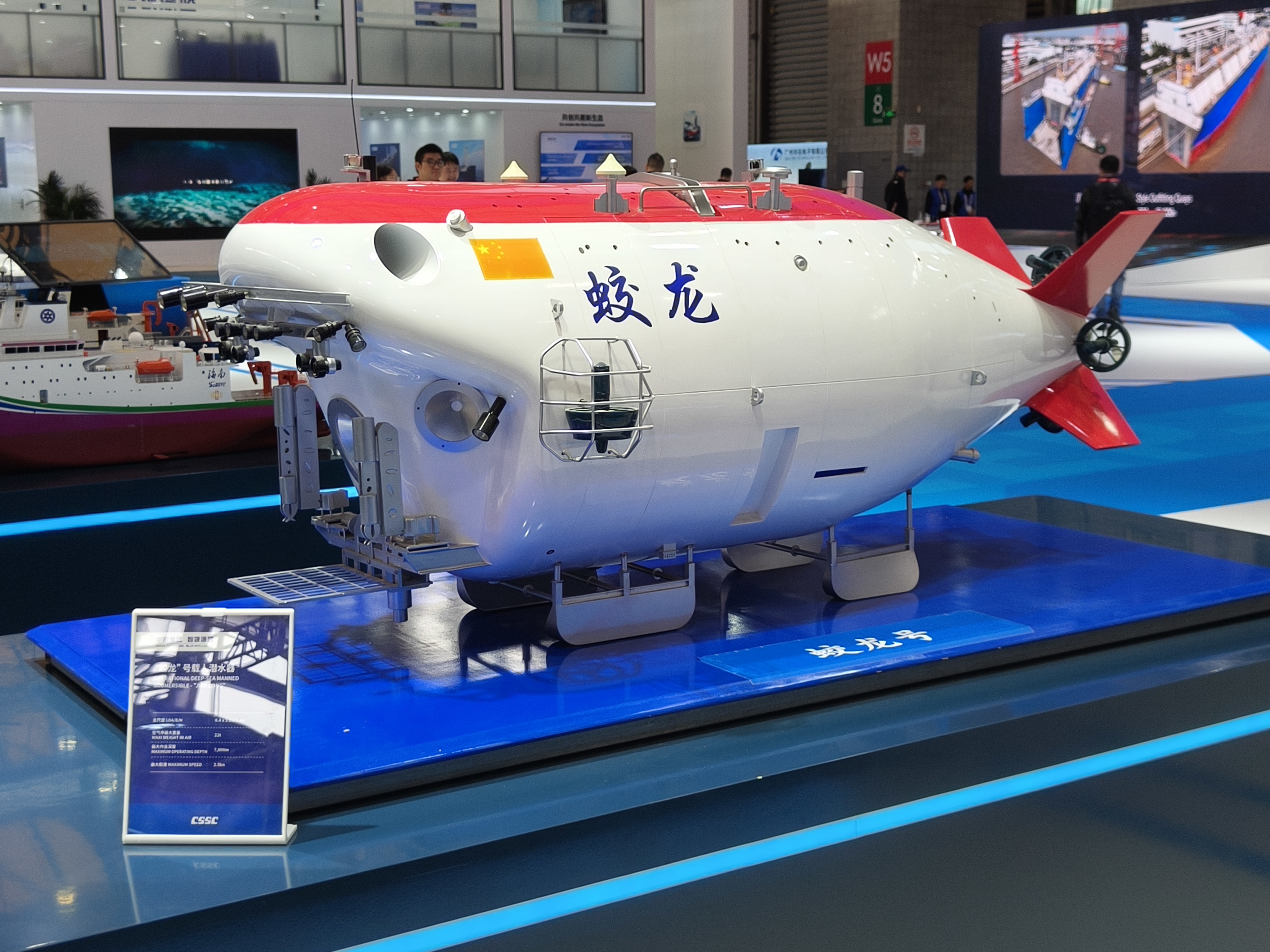
For the first time, this year's exhibition utilized a tent exhibition area in the inner square, expanding the total area of the 11 professional exhibition areas to 110,000 square meters, an increase of 15% compared to the previous session, equivalent to the size of 15 standard football fields. The exhibition area layout precisely covers the entire industry chain: In the N1-N4 pavilions (overseas pavilions), exhibition groups from 16 countries and regions made a collective appearance. The German pavilion, with an area of over 2,000 square meters, became the largest overseas exhibition group. As the guest of honor, Norway showcased the green technology achievements of 12 core enterprises. The scale of the W1-W7 pavilions (domestic pavilions) increased by 20% year-on-year, with 1,200 Chinese enterprises participating in groups. The China State Shipbuilding Corporation occupied a single-pavilion area of 4,000 square meters, setting a record for the largest exhibition area occupied by a single enterprise at the event.
The newly added Energytec Future Energy Exhibition Area became a focal point of attention. In a 12,000-square-meter space, zero-carbon fuel technologies such as methanol, ammonia-hydrogen, and LNG were intensively displayed. The debut achievements of enterprises like Zibo Diesel Engine Works Co., Ltd. and No. 711 Research Institute attracted an average of over 20,000 visitors per day, confirming the urgent need for green transformation in the global maritime industry.
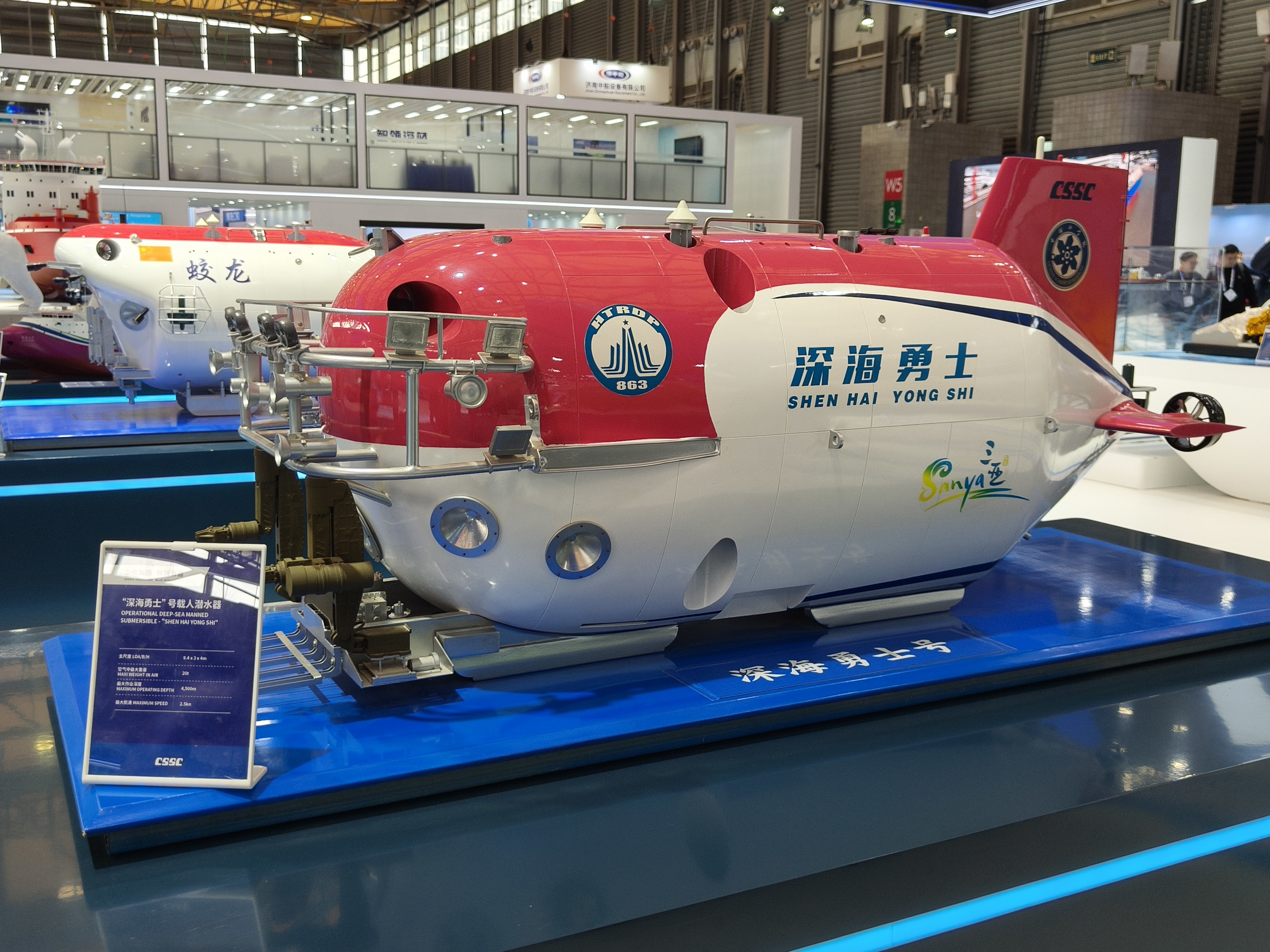
II. Global Giants Converge: 43% Overseas Exhibitors Demonstrate International Appeal
The global attractiveness of the exhibition is evident from the lineup of exhibitors: More than 2,200 units from over 40 countries and regions gathered in Shanghai, with overseas exhibitors accounting for 43%, an 8-percentage-point increase compared to the previous session. The world's top ten shipbuilding enterprises, including South Korea's HD Hyundai and Italy's Fincantieri, all attended. Power system giants such as Wärtsilä, Rolls-Royce, and ABB brought their latest intelligent propulsion equipment. Twelve international mainstream classification societies, including the American Bureau of Shipping (ABS) and Det Norske Veritas (DNV), all set up independent booths, creating a grand scene of "global industry giants on the same stage."
"China has ranked first in the world's top three shipbuilding indicators for five consecutive years. This is a market window that cannot be missed," said Marcus, President of the Asia-Pacific Region of Germany's Evonik Industries AG, voicing the sentiment of foreign enterprises. Data shows that the intended signing rate of overseas enterprises at this exhibition reached 92%, a 5-percentage-point increase compared to the previous session, and 18 enterprises have already reserved booths for the 2027 exhibition in advance.
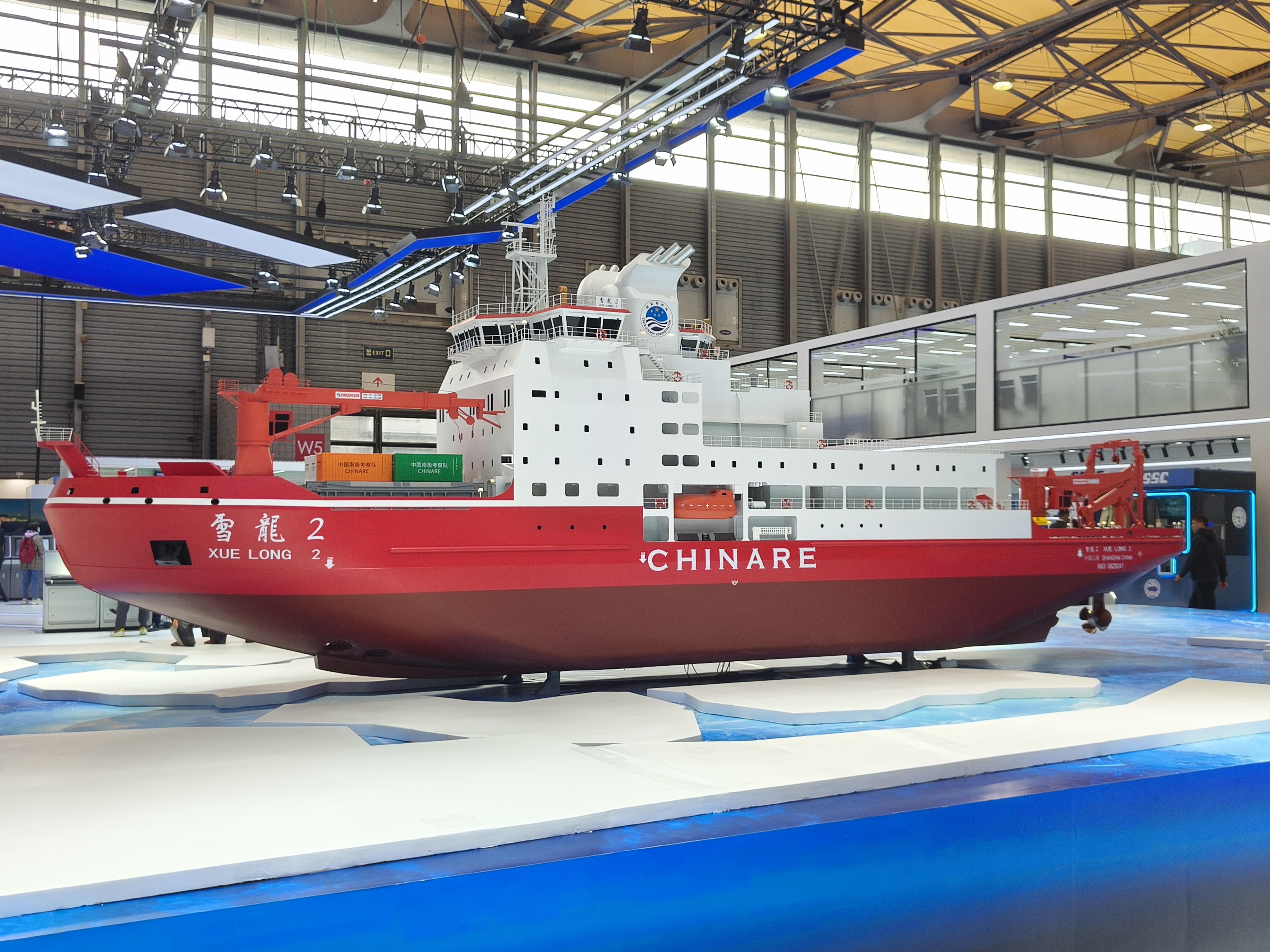
III. Influence Penetrates the Industry: 100,000 Visitors Unlock Trillions of Cooperation Opportunities
The scale and quality of professional visitors further highlight the exhibition's industry value: More than 100,000 professional visitors from over 100 countries and regions attended the event, with shipowners' senior management and procurement heads accounting for 35%. The world's top 20 shipowners, including COSCO Shipping and Maersk, all sent delegations of over 100 people. During the exhibition, discussions on core topics such as global new shipbuilding order dynamics and maritime financial policies directly influence the trend of the global maritime market in the next three years.
The Advanced Maritime Forum held concurrently became a hub of ideas. With the theme of "Intelligent Navigation, Green Symbiosis," five special sessions were set up. 1,200 academic representatives discussed "digitization and intelligence" and "green development." The data released by Xing Wenhua, Chairman of the Shanghai Society of Naval Architecture and Marine Engineering, stating that "China's top three shipbuilding indicators account for over 50% of the global total," sparked widespread discussion among global media. In addition, hundreds of supporting activities, such as the Pudong Shipping Week and the China Shipbuilding Science and Technology Week, were held intensively, resulting in over 300 cooperation intentions, with an estimated value of 28 billion yuan.
IV. Far-reaching Industrial Radiation: Shanghai Aims to Anchor Its Position as a Global Maritime Hub
The spillover effects of the exhibition are rapidly transforming into driving forces for urban development. Data shows that from January to September 2025, the LNG bunkering volume of Shanghai Port reached 563,000 cubic meters, a year-on-year increase of 71.8%, and methanol bunkering achieved a breakthrough from zero. The 12 international energy cooperation agreements reached during the exhibition will further consolidate Shanghai's position as a "global hub for green shipping fuels." Gao Dongsheng, Chief Economist of the Ministry of Industry and Information Technology, revealed at the forum that the shipbuilding bases in the Yangtze River Delta will rely on the exhibition platform to accelerate the construction of a world-class industrial cluster, with an expected output value of related industry chains exceeding 3 trillion yuan by 2030.
From an area of less than 10,000 square meters at the first exhibition in 1981 to the current 110,000-square-meter global benchmark, the 40-year growth history of the Shanghai International Maritime Exhibition is a microcosm of China's maritime industry's transformation from a "chaser" to a "leader." As Xing Wenhua, Chairman of the Chinese Organizing Committee of the exhibition, said, "This is not only a stage for product display but also a core arena for jointly building global maritime rules and shaping the ecosystem." This largest global maritime event is leveraging Chinese strength to drive the green and intelligent transformation of global shipping.

 HOME
HOME