
News
AES Alkaline Earth Silicate Wool: Leading the Trend of Green High-Temperature Insulation Materials
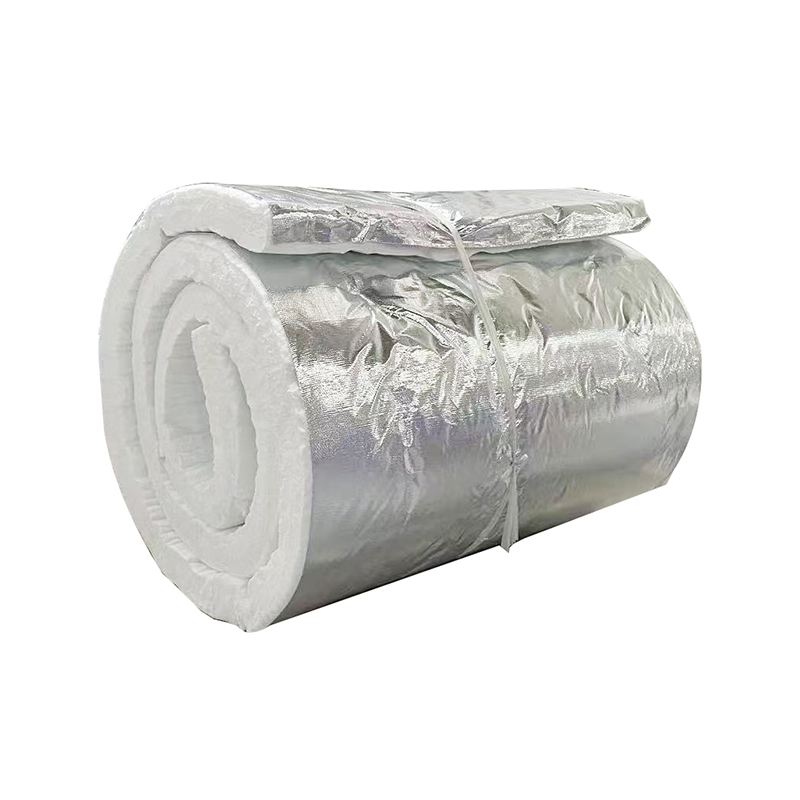
AES Alkaline Earth Silicate Wool is a high-performance eco-friendly insulation material with excellent solubility and extremely low biopersistence. Offering up to 1200°C continuous use temperature, 0.054 W/(m·K) thermal conductivity, and Class A non-combustible rating. Widely used in industrial furnaces, petrochemical pipelines, marine fire protection, offshore engineering, building insulation, rail transportation, and aerospace thermal protection. Compliant with EU EC1272/2008 and GB/T 16483 standards. Improve energy efficiency by 10%–15% with AES wool — the sustainable choice for high-temperature insulation.
Global Market Steadily Growing, Asia-Pacific Region Becomes Main Engine
With the continuous advancement of industrial upgrading and low-carbon policies, the demand for high-performance eco-friendly insulation materials is steadily rising. Industry data shows that the global AES wool market size is expected to grow from approximately US$883 million in 2025 to US$1.194 billion by 2032, representing a compound annual growth rate (CAGR) of 4.40%. The Asia-Pacific region leads globally in growth rate, with China occupying a leading regional position with a market size of about US$400 million and a CAGR of 7.5%.
Technological Innovation Drives Industrial Upgrading
Currently, the AES wool industry is transitioning from traditional insulation materials toward high-performance solutions. Companies continue to optimize fiber chemical composition and manufacturing processes, significantly enhancing product high-temperature resistance and service life. In high-end application areas, specialized AES fiber products with temperature resistance exceeding 1600°C are gaining favor in industries such as aerospace and new energy equipment.
Traditional Material Substitution Accelerates, Environmental Advantages Stand Out
The global tightening of restrictions on traditional refractory materials presents a historic opportunity for AES wool. AES wool contains no asbestos or volatile harmful substances, features extremely low biopersistence, and qualifies as an environmentally friendly insulation product. It complies with EU EC1272/2008 and China GB/T 16483 standards, making it the preferred material in industrial high-temperature insulation applications. Its Class A non-combustible rating is widely used in building fire protection, rail transportation, marine vessels, chemical industry, and other fields.
Diverse Application Scenarios Continue to Expand
Leveraging its excellent comprehensive performance, AES wool has achieved widespread application across multiple sectors:
Industrial Sector: Widely used as insulation linings for high-temperature equipment such as petrochemical cracking furnaces, glass furnaces, and ceramic kilns, as well as for thermal insulation of boilers and high-temperature pipelines, effectively reducing energy consumption. In the steel and non-ferrous metal smelting industries, AES wool is used for furnace body insulation, expansion joint filling, and gasket manufacturing, significantly enhancing equipment thermal efficiency and service life.
Marine and Offshore Engineering: In shipbuilding, AES wool is used for fireproof insulation in critical areas such as engine room high-temperature equipment, exhaust pipes, and boiler rooms. Its Class A non-combustible rating and corrosion-resistant properties meet stringent marine safety requirements. Additionally, when applied in ship bulkheads, decks, and other structures, it provides both insulation and sound absorption capabilities, improving crew working conditions. Offshore engineering platforms also show strong demand for high-temperature equipment protection and pipeline insulation.
Building and Transportation: In the construction sector, AES wool is suitable for fire-resistant air ducts, wall fireproof fillers, and passive fire protection systems. In rail transportation, it is widely used in sound insulation barriers and machine room acoustic absorption projects, enhancing passenger comfort and operational safety.
Lifecycle Environmental Advantages Stand Out
In terms of lifecycle green value, AES wool offers outstanding advantages: the production process can utilize industrial by-products with no toxic emissions; during use, it improves equipment energy efficiency by 10%–15%; and after disposal, it can be harmlessly treated or recycled for reprocessing, fully aligning with the "dual carbon" strategic goals.
Product Details (Click to Explore) ——— AES WOOL